

From snowy peaks to sun-drenched trails or coastal scapes, discover why sun protection matters in every season — and why mineral SPF50 deserves a place in your outdoor essentials.
There is something magical about being in the mountains. The crisp air, the snow, the sunshine, the freedom. But while you’re enjoying the view, your skin is exposed to a powerful combination of UV radiation, reflected sunlight, freezing temperatures and wind.
And here’s something worth remembering: cold weather doesn’t mean weak sunshine.
Whether you’re skiing, snowboarding, hiking or simply enjoying the outdoors, understanding sun protection is essential for your skin’s health — today and in the years ahead.
Mineral vs Chemical Sunscreen: What’s the Difference?
Both mineral and chemical sunscreens protect against ultraviolet radiation, but they use different UV filters.
Mineral sunscreens use zinc oxide and/or titanium dioxide as UV filters. These ingredients primarily absorb UV radiation while also reflecting and scattering some of it. When properly formulated, zinc oxide provides broad-spectrum protection against both UVA and UVB rays.
Mineral UV filters are generally well tolerated, making them a popular choice for sensitive skin. Depending on the formulation, they may also contain nourishing plant oils, moisturising ingredients and other emollients that help protect the skin from dryness and environmental exposure.
Chemical sunscreens use organic UV filters — and no, “organic” doesn’t mean what you might think! In chemistry, organic simply means carbon-based. It doesn’t mean natural, plant-derived or certified organic. These filters absorb UV radiation and release much of that energy as small amounts of heat. They often create lighter, more transparent formulas, although some athletes find they make them sweat more, they feel uncomfortable or irritate them when sweating.
But what about their safety? Research has shown that some chemical UV filters can enter the bloodstream, while ingredients such as oxybenzone and homosalate have raised concerns about possible hormone-disrupting effects. Certain filters can also trigger allergic reactions or skin sensitivity. Not all chemical filters carry the same concerns, and some are not that bad, but as nature lovers we always prefer the natural products, so zinc oxide is our “go to” filter.
The takeaway is simple: know what’s protecting your skin, understand the ingredients, and choose a sunscreen that suits your skin and your adventures.
So which one is better – chemical or mineral? Both can offer excellent protection. The most important factors are suitability for your skin and activity.
Why SPF50 Matters at High Altitudes
Mountain environments expose our skin to several challenges at once. The higher you climb, the stronger UV exposure can become. At higher altitudes, there is less atmosphere to absorb ultraviolet radiation. Snow adds another challenge, reflecting a substantial amount of UV light towards your skin.
This means your face can receive radiation from both direct sunlight and reflected light, even when temperatures are below freezing.
Cold air and wind can increase dryness and leave skin feeling tight, rough or irritated. Meanwhile, UV radiation contributes to premature skin ageing, including fine lines, uneven pigmentation and loss of firmness.
That’s why a good mountain skincare routine should combine broad-spectrum sunscreen, moisturising skincare and physical protection against the elements.
SPF30 vs SPF50: Is There Really a Difference?
Under laboratory conditions:
SPF30 filters approximately 96.7% of UVB radiation.
SPF50 filters approximately 98% of UVB radiation.
Although the percentages look similar, SPF50 allows approximately 40% less UVB radiation through than SPF30 under equivalent testing conditions. For prolonged exposure in the mountains or under strong sunshine, that extra margin of protection is valuable.
However, SPF50 doesn’t mean all-day protection. Generous application and regular reapplication remain essential.
Sun Exposure and Skin Cancer: Why Awareness Matters
We love the outdoors. And we believe that enjoying nature should go hand in hand with understanding how to protect ourselves.
Prolonged and repeated exposure to ultraviolet radiation can increase the risk of skin cancer. Sun protection isn’t just about avoiding sunburn or preventing wrinkles — it’s about looking after our skin throughout a lifetime of adventures.
We will explore this important subject in more detail in our next Journal article “Sun Exposure and Skin Cancer: Why Awareness Matters.”
Sun protection is not about being afraid of the sun. It’s about respecting it.
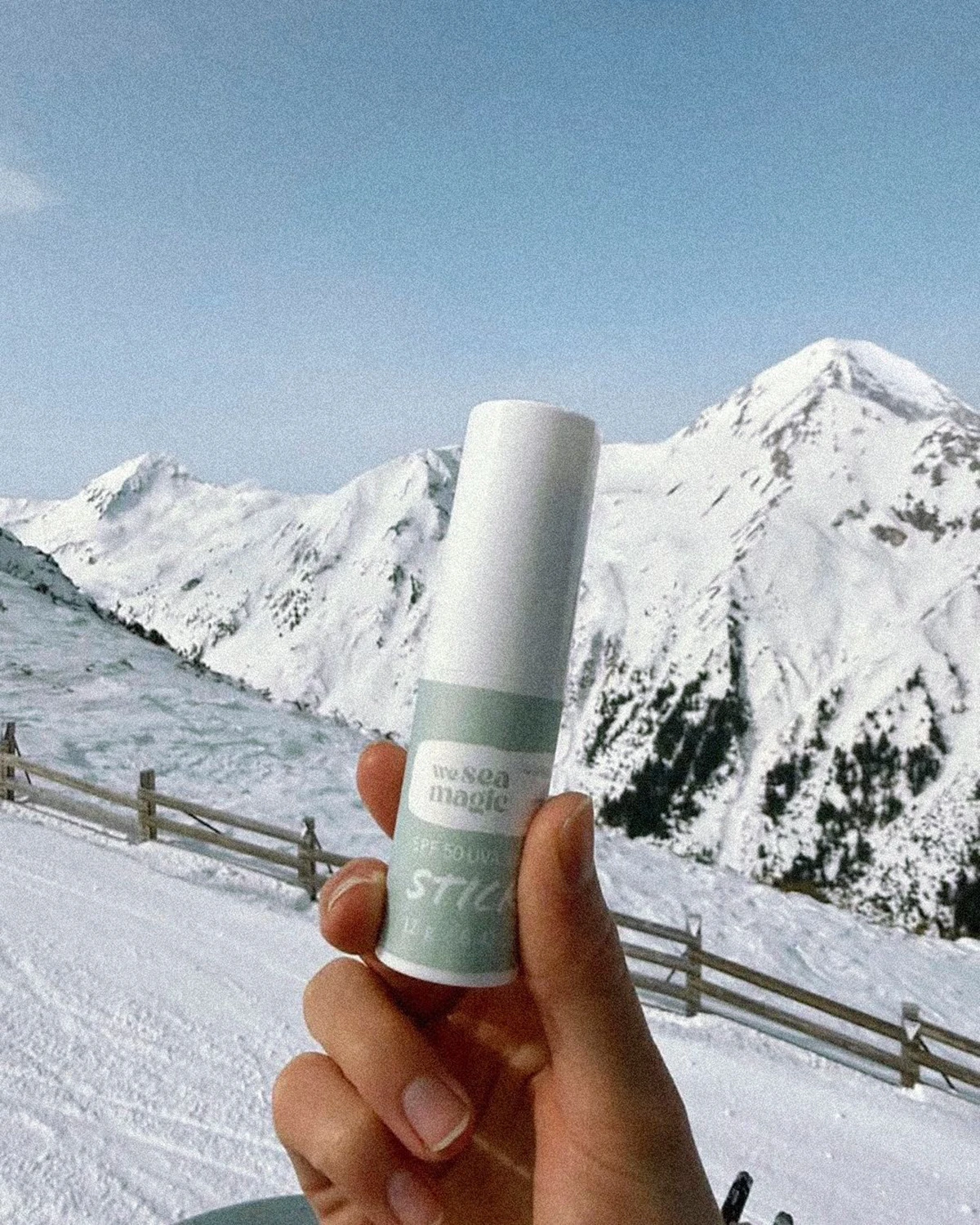
Why Do Mineral Sunscreen Sticks Feel Firmer in Cold Weather?
Ever noticed your sunscreen stick becoming harder or drier in freezing temperatures? It’s perfectly understandable. Oils, butters and waxes change consistency as temperatures drop.
Jojoba oil, for example, can become thicker or cloudy in the cold, while ingredients such as coconut oil and cocoa butter naturally solidify at relatively low temperatures.
Waxes give sunscreen sticks their convenient solid format, but also make them firmer in cold conditions.
A harder stick doesn’t automatically mean less UV protection. However, it may become more difficult to apply a generous, even layer.
Our tip: Keep your sunscreen stick in an inner jacket pocket. This way your body warmth can help maintain a more comfortable application texture.
How to Protect Your Skin in the Mountains
A simple routine makes a meaningful difference.
Before heading out: If you are using a stick – moisturise your skin and apply broad-spectrum SPF50 generously and evenly to exposed areas.
During your adventure: If you aren’t sweating, and using a stick, your coverage might actually last more than 2 hours (depends on the formula) but we are obliged to say “re-apply every 2 hours”. Of course, after rubbing or wiping your face. Use protective clothing and accessories to reduce exposure.
After your adventure: Cleanse gently and apply a moisturiser to replenish hydration and support your skin barrier.
Remember: sunscreen is only one part of sun protection. Sunglasses, suitable clothing and avoiding excessive UV exposure are equally important.
And in Case You Wonder
Is SPF50 recommended for skiing and snowboarding?
Yes. SPF50 is a sensible choice for full day in the snow.
Is mineral sunscreen better for sensitive skin?
Mineral UV filters are generally well tolerated, although the complete formula matters. Neither mineral nor chemical sunscreen is automatically suitable for everyone.
The Takeaway: Protect Your Skin, Keep the Adventure
Understanding how UV radiation, altitude, wind and cold affect your skin helps you enjoy the outdoors more responsibly.
We’ve got you covered with our mineral SPF50 POCKET MAGIC STICKS, available with tint or without tint.
Their pocket-sized format makes it easy to keep sun protection close, wherever your adventures take you.
And because sun protection goes beyond choosing the right sunscreen, we invite you to explore our next Journal entry “Sun Exposure and Skin Cancer: Why Awareness Matters”.
Love the sun. Respect the sun. Respect your skin. Keep the adventure.