

You’ve been in the water for a couple of hours. Great session. Face feels a little dry… Then you shower.
Your skin now feels tight and if it’s the dry type, could be even flakey.
We already know that hours in the sun, sea and wind take their toll. But what’s actually happening to your skin and hair is a little more interesting than “salt water dries you out.”
PLOT TWIST: Salt isn’t necessarily the villain.
Research suggests that certain mineral-rich salt waters may actually support skin-barrier function and hydration under particular conditions.
So the story isn’t simply salt = dry skin. It’s the whole cocktail: prolonged water exposure + salt + UV + wind + repeated wet/dry cycles.
Your skin barrier’s basic job is surprisingly simple: keep the good stuff in and the outside world out. After hours in the elements, it gets overworked and can’t keep up.
Kitesurfers, windsurfers and sailors, you guys get an extra serving!
Surfers spend a substantial part of a session in the water. Kitesurfers, windsurfers and sailors can spend hours above it, exposed to sun, salt spray and continuous moving air.
And here’s the sneaky part: THE WIND CATCH! Feeling cooler doesn’t mean less UV.
That lovely breeze making a blazing session feel perfectly comfortable isn’t turning the UV down. UV radiation can’t be felt, which means temperature isn’t a reliable indicator of how much UV you’re actually getting. And out on the water, reflected UV adds to the exposure too.
So a long day on the water can mean:
UV + salt spray + wet/dry cycles + relentless wind and your skin working overtime too.
And then there’s the hair…
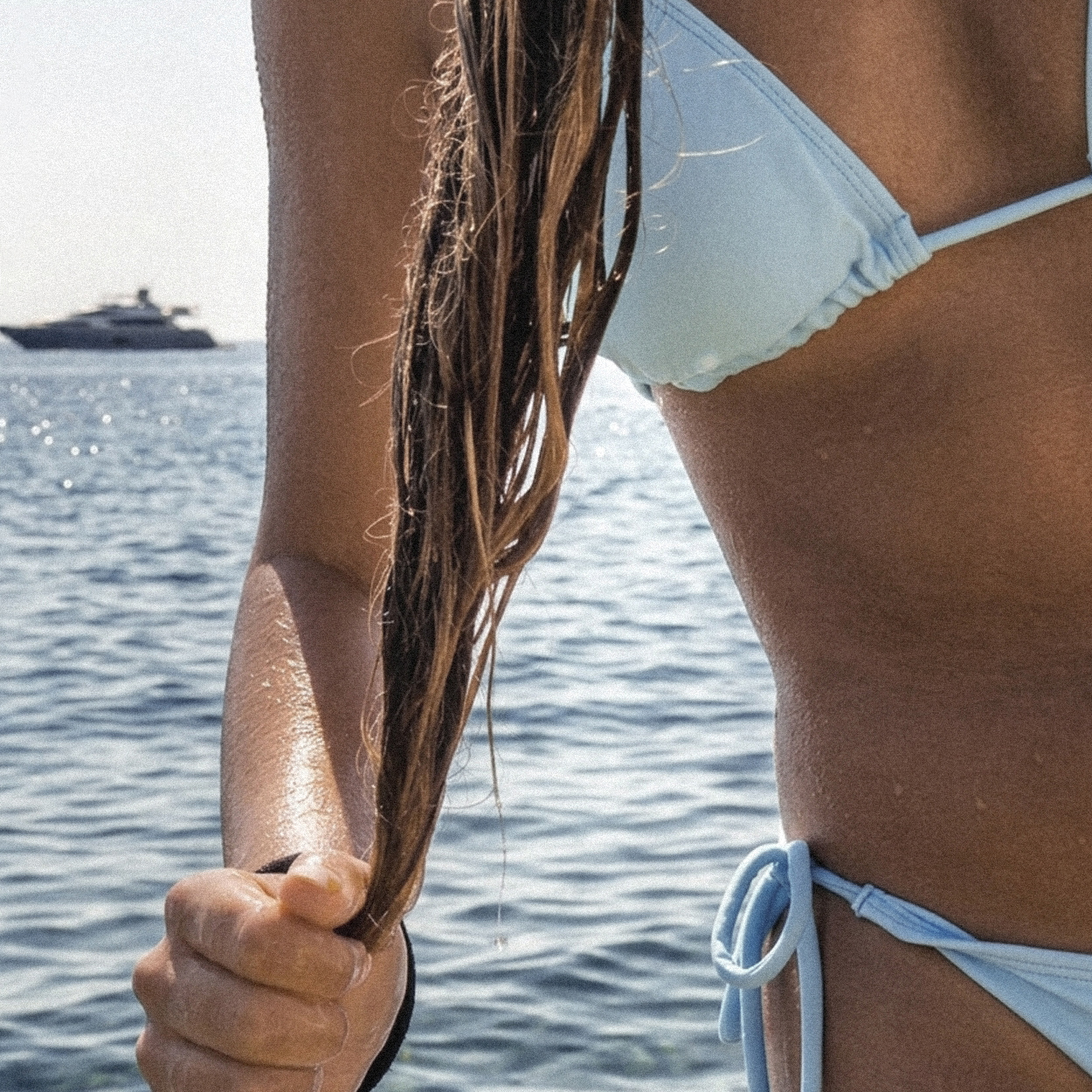
Mermaid hair when you come out of the water. Bird’s nest when you try to brush it. The technical explanation involves increased friction. The surfer explanation is:
WHY IS MY ENTIRE HEAD ONE KNOT?
But wait… There is more:
The sun isn’t just giving you highlights.
Research shows that sunlight can contribute to changes in the proteins, lipids and pigments that make up the hair fibre. UVB has been associated particularly with protein damage, while UVA contributes strongly to colour changes.
So those beautifully sun-kissed surf strands aren’t only changing colour. The hair fibre itself has been dealing with the sun too.
This is why reducing friction, replenishing lipids and improving slip matters: easier detangling also means less mechanical damage from fighting your way through those knots. You might want to give our KERATIN products a try.
THE POST-SURF RESET
Face: properly but gently remove mineral sunscreen (of course we recommend our fabulous gentle cleanser, then restore moisture and lipids to support the skin barrier.
Hair: wash out the salt. Condition. Nourish. Strengthen. And detangle gently.
Think of it as recovery training… for your skin and hair.